


As an insurance agent, you know by now how important it is to remain compliant. Following the Medicare Advantage & Part D Communication Requirements should be one of your top priorities.
However, there is something else you’ll want to keep on your radar that you may haven’t considered yet: preventing insurance negligence.
We’ll cover what counts as negligence and how to prevent it! That way, you can be sure you’re giving your clients paramount service.
What Is Insurance Agent Negligence?
An insurance agent negligence claim can arise when you, the agent, make a mistake that leads your client to believe they have coverage that they don’t have.
Negligence can overlap with other concerns, such as insurance agent misconduct, depending on the situation. It can also be an error on your part that later leads to your client being denied coverage.
If you make this type of mistake, your client may be able to seek compensation for damages. Your client can file a claim against you for the following reasons:
- Failure to procure requested coverage
- Failure to obtain coverage
- Misrepresentations
- Failure to properly advise clients of coverage
- Errors and omissions (E&O)
According to the law, it doesn’t matter if your mistake was intentional or unintentional. It only matters that you were the one to make the mistake. That’s why these situations could lead to professional liability claims.
It doesn’t matter if your mistake was intentional or unintentional. It only matters that you were the one to make the mistake.
Laws can differ from state to state, but there are many similarities aross the country. Specific duties are spelled out in more detail in each state’s codes or statutes.
Can My Insurance Client Sue Me?
Yes, your client can sue you if you are guilty of insurance agent negligence. Agents often ask themselves what circumstances can lead their clients to wonder, “Can I sue my insurance agent for negligence?”
But for your client to sue you on grounds of negligence, they must be able to prove the following:
- Duty: You had a duty to act or refrain from acting in a certain way.
- Breach: You failed in your duty toward your client.
- Causation: The breach of duty caused your client harm that you, the agent, should have foreseen.
- Damages: Your client suffered actual damages (such as lost wages and medical expenses).
The consequences of insurance agent negligence can be quite grave for you and your client. Being sued could potentially cost you a lot of money and negatively affect your business. The effects your client may suffer could be even worse.
We encourage you to steer clear of any of these wrongdoings not just to avoid the consequences, but also, so your client doesn’t experience the detrimental outcome.
How Can I Avoid Insurance Agent Negligence?
Proactively avoiding negligence takes a keen eye. If you’re on top of the following things in your business, you’ll have an easier time avoiding the common negligence pitfalls.
Document Everything
You already know that documenting everything isn’t only the smart thing. But it’s also how you can remain compliant with federal and state regulations. While you already have to maintain recordings of all Medicare sales calls and Scopes of Appointment, you can also keep a detailed record of other communications and documents such as:
- Conversations — in text, over the phone, over email, or in person
- Recommendations given to the client on plans
- Client files and book of business
- Proof of coverages and transactions
- Claims documentation
- Compliance and licensing
- Business operations
If you ever end up dealing with a claim, strong documentation is essential when working under an E&O insurance policy.
Use Checklists & Procedures
The easiest way to prevent insurance agent negligence is to do your job correctly, carefully, and morally. We understand mistakes can happen. In an industry such as this, slipups can be costly.
To do this, you can use standard checklists to ensure that no coverage options are missed during applications and renewals. Also, having carefully laid out procedures for how you conduct your business can help keep you on track as you go about your day.
Additional tips for insurance agents include reviewing all required forms before submission. You can easily add something like that to one of your checklists or as a part of one of your procedures.
Clear Communication
Be sure to double-check your work before you communicate with your clients. If you’re unsure of something, don’t be afraid to admit that to your client. Take the time to find the honest answers they need. Lying is never ethical and could come back later as a serious problem.
Explain policy terms, exclusions, and limiations in plain language.
Explain policy terms, exclusions, and limitations in plain language. Clear, jargon-free explanations prevent misunderstandings about insurance protection. Clients don’t necessarily need to know all of that to fully understand their options.
Review Policies Regularly
If you perform annual policy reviews with your clients, you can stay on top of any potential gaps in their coverage. Be sure to sit down with each of your clients and go through the details of what may be changing or what’s staying the same.
The more transparent you are about your clients’ insurance coverage, the more likely you can build trust with all of them. As you know, building trust with your clients can lead to more business!
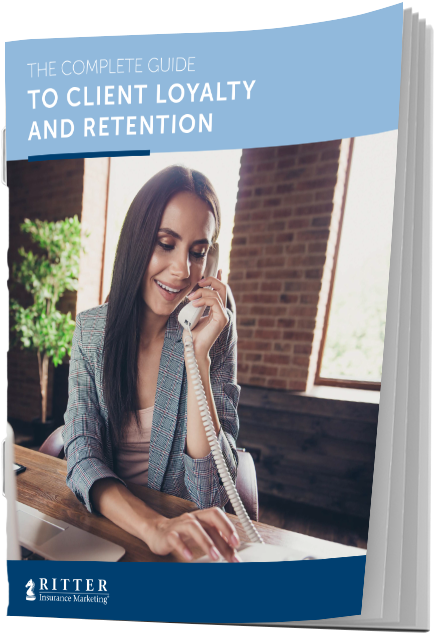
Trust isn’t the only thing that keeps clients coming back for more. Check out other ways to retain your clients in The Complete Guide to Client Loyalty and Retention!
Avoid Overpromising
Never, under any circumstances, make false claims or promises to clients. Making sales as an insurance agent is a priority, of course. However, your top priority should be finding a plan that works for your client.
Overselling a plan by making your client think they will have the “perfect” coverage can hurt both them and you in the long run. Walk through plan options with your clients thoroughly.
You may not be able to find a plan that’s exactly what they’re looking for. However, if you have a diverse portfolio, there should hopefully be an option that fits the majority of their needs.
Promptly Report Claims
If you do happen to become aware of a potential insurance claim, notify your E&O carrier as soon as possible. You should report the potential claims to your carrier in writing, like via email, a formal notice, or a specialized online form.
You should report the potential claims to your carrier in writing, like via email, a formal notice, or a specialized online form.
This is especially important to report if you receive a subpoena, a summons, or a demand letter. If you speak with your E&O insurer first, especially before admitting fault to your client, you’ll have a better defense to start out with.
Insurance agent negligence is something every agent should be aware of and know how it can affect them and their clients.
Staying aware of how insurance law evolves can further protect both you and your clients If you do this and follow the Medicare Advantage & Part D Communication Requirements, you’ll be golden!
As your partner, Ritter can help you stay up to date with the latest information on negligence. Regsiter with Ritter for free today and you’ll receive the full back-office support we provide to help keep you out of hot water!





Not affiliated with or endorsed by Medicare or any government agency.
Share Post